
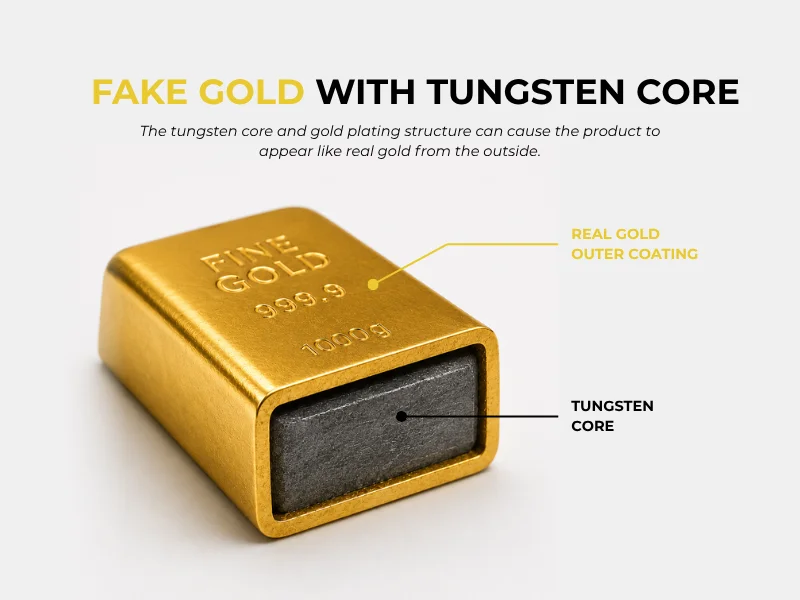
A gold bar's weight can be correct, its dimensions identical to the real thing, and it can carry authentic-looking hallmarks. Yet it can still be fake.
Tungsten fraud — particularly in high-value gold bars — is one of the most discussed topics among investors. The spread of misinformation online makes it even more confusing. In this article, we cut through the noise and explain what you actually need to know.
Why Is Tungsten Used in Gold Fraud?
Counterfeiters aim to replicate the weight and appearance of genuine gold as closely as possible. This is where tungsten comes in.
Tungsten is one of the few metals with a density very close to that of gold. This makes it possible to produce fake bars that closely match a real gold bar in both weight and external dimensions.
In particular with larger gold bars, inserting a tungsten core and plating the exterior with real gold is a fraud method that has been documented in various countries around the world.
Can Tungsten Actually Be Mixed Into Gold?
Short answer: No.
The phrase "tungsten mixed into gold" — common online — is technically inaccurate. The reason is that the two metals have vastly different melting points:
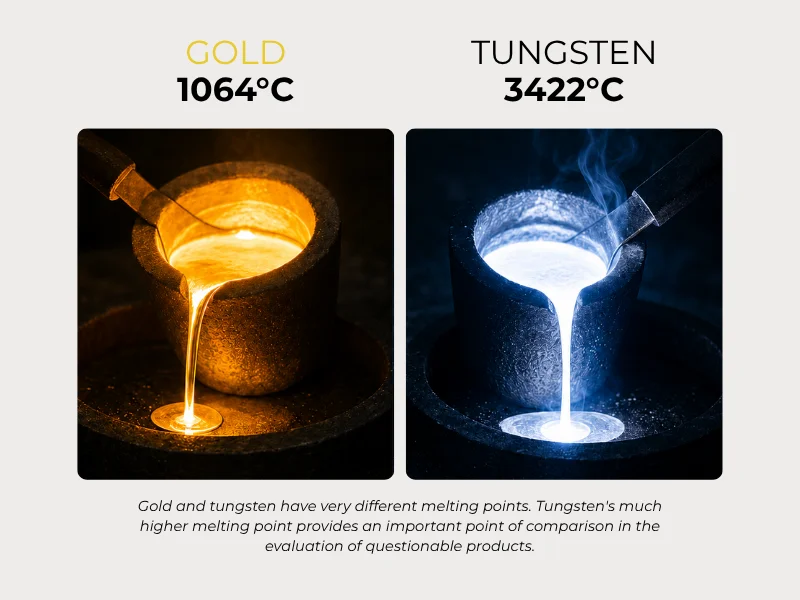
Melting and blending the two into a homogeneous alloy is practically impossible. The actual fraud method is different: counterfeiters insert a tungsten core inside a gold bar, or coat a tungsten body with real gold. Since the outer surface is genuine gold, the fake can be very difficult to identify at first glance.
Is Weighing the Gold Enough?
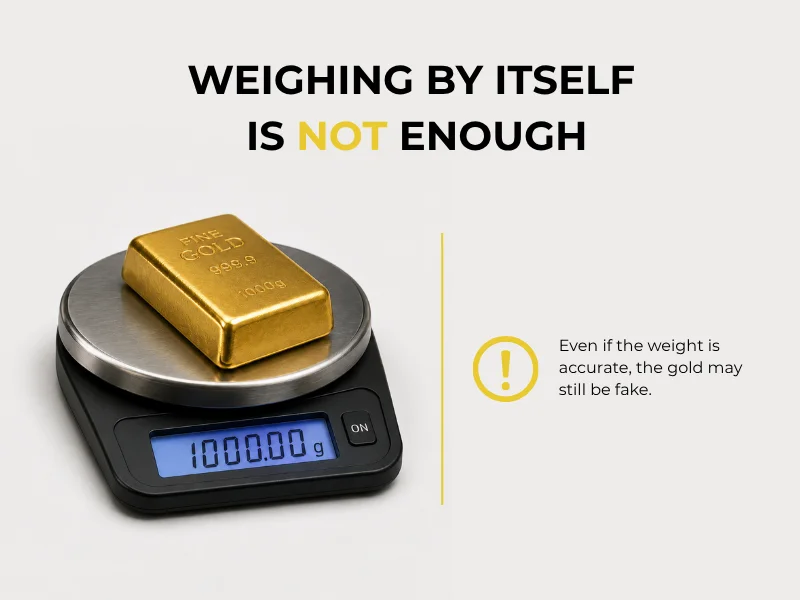
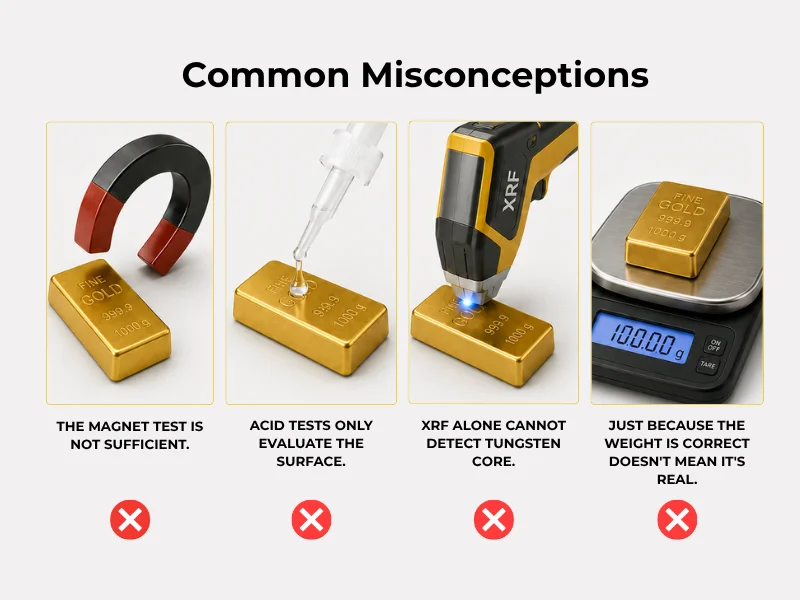
Unfortunately, no. In the past, many people checked the weight of gold to determine whether it was genuine. However, because tungsten's density is so close to that of gold, weighing alone cannot provide a reliable verification.
Can XRF Analyzers Detect Tungsten?
The answer is both yes and no.
XRF analyzers measure the elemental composition of a gold bar's surface in seconds, with high precision. This makes it possible to quickly determine gold purity, alloy composition, and surface content. For this reason, XRF devices are widely used by jewelers, refineries, and businesses in the precious metals sector.
XRF analyzers are excellent at determining gold purity and surface composition. For high-value gold bars, however, using XRF together with additional verification methods is the most reliable approach.
What Methods Are Used to Detect Fake Gold?
When the internal structure needs to be verified, different analytical methods are used in combination:
A small sample is taken from the bar to directly inspect the internal structure. The most definitive method when suspicion is high.
Uses sound waves to non-destructively examine the internal structure of the bar.
Analyzes the metal's conductivity properties to reveal discrepancies.
The most comprehensive and conclusive option when needed.
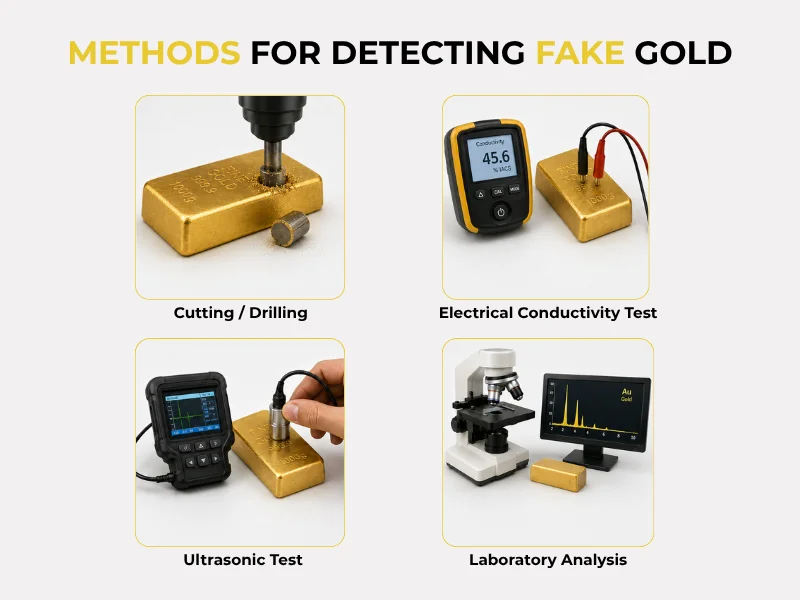
Using multiple methods together provides far more reliable results when detecting counterfeit gold.
What to Watch Out for When Buying Gold
The most effective protection against fraud starts at the point of purchase:
- Buy from reputable jewelers or authorized dealers.
- Be suspicious of products priced significantly below market value.
- Request professional analysis for large investments.
- Do not rely solely on visual inspection or weighing when in doubt.
Even these simple precautions can prevent many fraud attempts.
Common Myths About Gold Fraud
A great deal of misinformation circulates online about tungsten-core fake gold. Here are the most widespread misconceptions:
Conclusion
Tungsten fraud is a real risk — but it is not as widespread as the internet sometimes suggests. This method, most commonly seen in larger gold bars, can be detected when the right analytical techniques are applied.
When investing in gold, buying from reputable dealers is always the first line of defense. For high-value bars in particular, using professional analytical methods significantly reduces risk.
Today, XRF analyzers, ultrasonic testing systems, and other modern analytical technologies make gold authentication more reliable than ever. For jewelers, refineries, and businesses in the precious metals sector, having the right analytical equipment is essential for safe trading and customer trust.